CTC vs. Orthodox Tea: Which One Belongs in Your Cup?
A breakdown of processing, liquor color, caffeine punch, and why one is meant for black sipping while the other reigns supreme with milk.
Teji Cha Tea Masters
Editorial Team • Berubari, West Bengal
🍃Key Takeaways
- ✓Orthodox tea is rolled gently to preserve whole leaf geometry, ideal for clear black sipping.
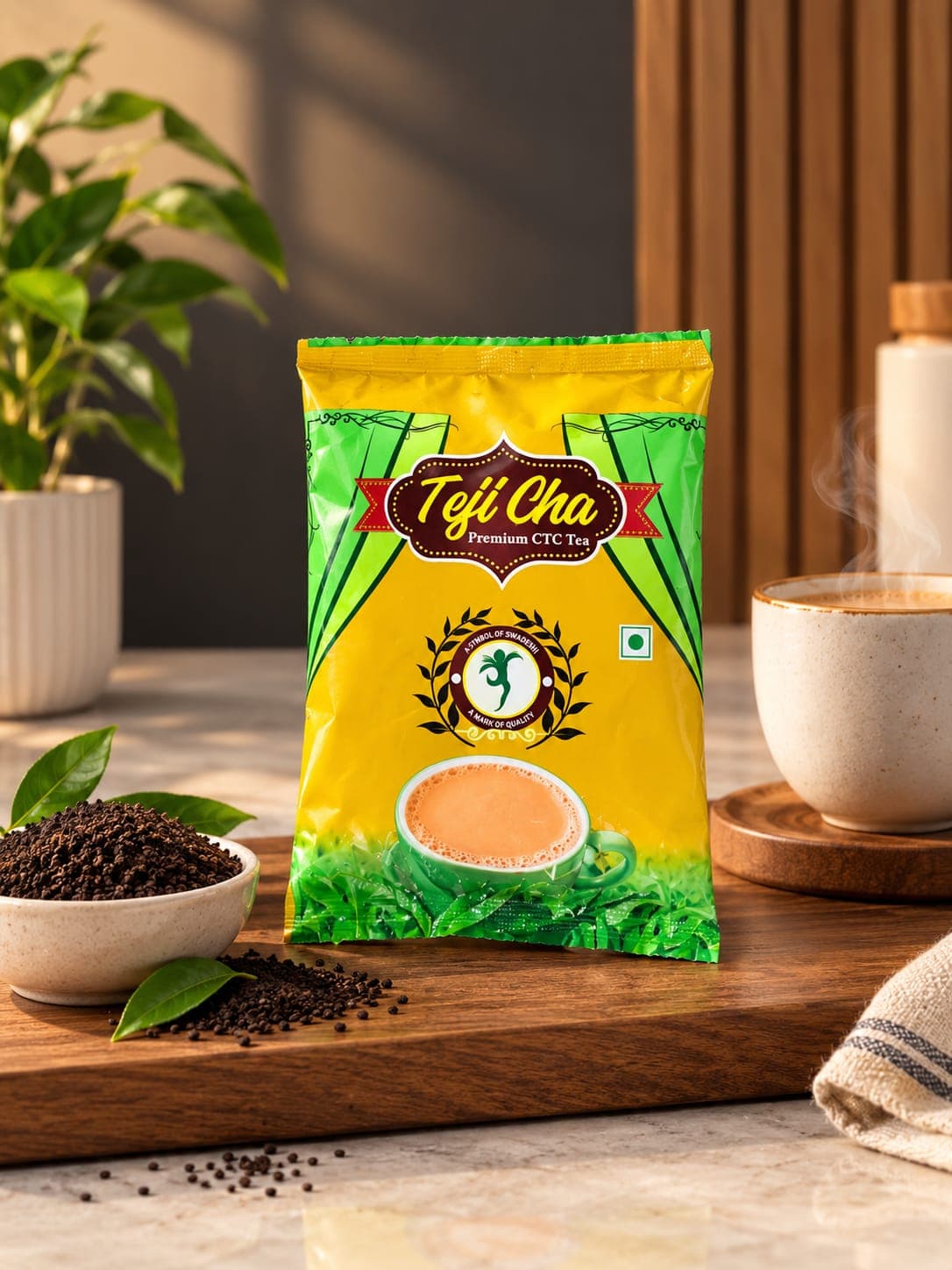
- ✓CTC tea is crushed into granules, designed specifically for rapid infusion with hot milk.
- ✓Orthodox offers nuanced floral notes; CTC offers briskness, dark liquor, and bold morning energy.
- ✓Both teas have distinct purposes in an Indian household.
Two Different Worlds of Processing
When stepping into a tea boutique, you will often hear tea lovers debating orthodox versus CTC. While both originate from the Camellia sinensis plant, the path from freshly plucked leaf to dried tea represents two completely distinct philosophies.
Orthodox manufacture mimics age-old artisanal hand methods. Whole two-leaves-and-a-bud flushes are handled delicately to ensure the leaf remains unbroken.
The Liquor and Flavour Profile
Orthodox teas are best savored without milk or sugar. They reveal subtle layers of wild honey, citrus, floral muscatel, and woodiness. However, if you pour milk into an orthodox Darjeeling tea, the delicate notes are immediately swallowed by dairy fat.
CTC teas, on the other hand, are engineered to conquer milk. The granular shape releases deep theaflavins and thearubigins within 60 seconds, creating the hearty reddish-amber liquor that gives chai its soul.